

From PAYE compliance to structuring employee incentives, we make complex employment tax matters clear, compliant, and optimised for the benefit of your business and your team.

.png)
.png)


Employing staff means your business is growing. This growth is a sign of success, but it also brings a range of new tax obligations and planning opportunities.
The key to smart employment tax planning is to ensure your business is compliant while optimising employment tax liabilities. This is essential for avoiding unexpected costs and making the most of all incentive opportunities available.
Gravitate helps you meet all your employment obligations efficiently and accurately while maximising benefits for your business and its employees.
Official PAYE income tax bands: GOV.UK Rates & thresholds for employers 2025 to 2026
Managing Pay As You Earn (PAYE) tax and National Insurance Contributions (NICs) becomes more demanding and complex as your workforce grows.
Other factors, like working patterns, part time workers or zero-hours contracts can complicate this further. Gravitate can handle your registration, ongoing compliance and reporting to keep you fully aligned with HMRC’s strict rules.
There are several benefits that you can provide to employees, like company cars or private medical insurance. But lots of these must be reported via P11D forms, because they are taxable on the employee and chargeable to National Insurance for the employer.
We help you identify all reportable benefits, prepare accurate P11D submissions, calculate Class 1A NICs, and ensure your reporting is timely and complete.
From April 2027, mandatory payrolling of Benefits of Kind will take effect, which we can also help you with. Employment benefits will no longer be a once-a-year discussion; they will become part of the monthly/weekly payroll cycle.
We encourage early adoption to minimise the transition, and we can guide you through the process to maximise on the many benefits available.
Employers pay Class 1 National Insurance at 15% on employee earnings above £5,000 per year (2025/26).
National Insurance costs are a significant part of your company’s employment expenses. At Gravitate, we will review your employment structure to uncover opportunities to reduce Employer NICs, ensure correct categorisation of employees, and help you maximise the Employment Allowance.
Shares, bonuses and other incentives are a great way to reward and motivate team members and retain key talent. While rewarding, they must be structured carefully to ensure they are tax efficient.
Gravitate can advise on the most suitable share schemes (such as EMI, CSOP, SIP or SAYE) and alternative incentive arrangements too. We’ll also take care of valuations, filings, and HMRC compliance.
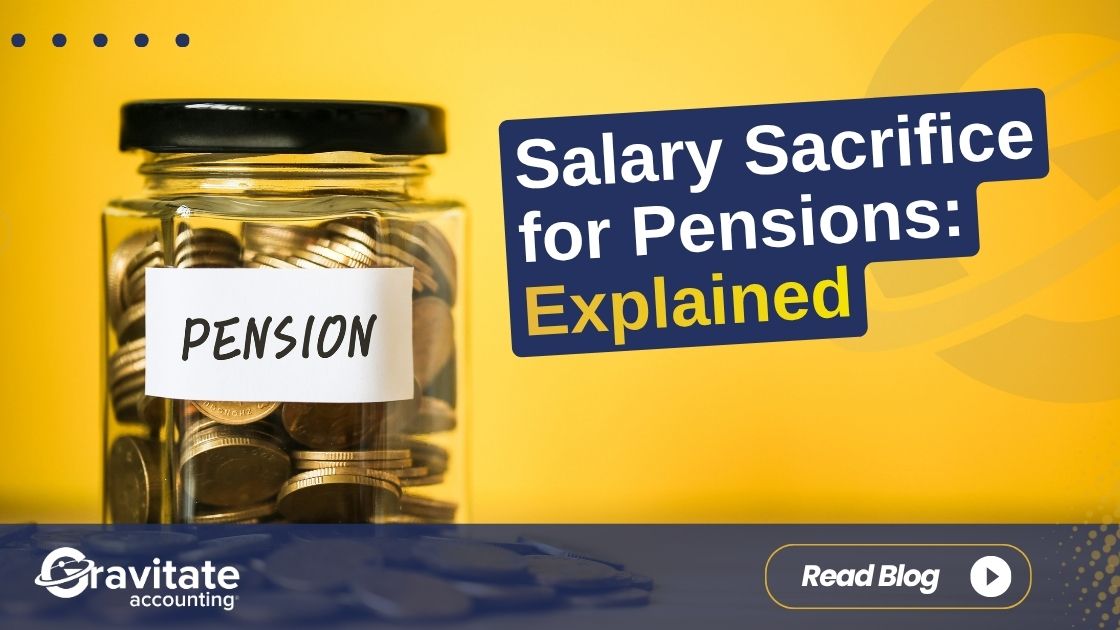
Salary sacrifice arrangements can deliver big tax savings for both employers and employees. Salary sacrifice can cover things like pension contributions, company cars or childcare.
Our team will work with you to design, set up and document an effective salary sacrifice scheme. We understand the importance of salary sacrifice, because we do it ourselves!
Company cars are a great incentive for staff, but they have complex Benefit in Kind rules and potential tax pitfalls to be aware of. Gravitate can you set up or review your company car policy, let you know the most tax-efficient options both now and over the period of your lease, and manage ongoing compliance.

We take employment tax compliance seriously, but we don’t stop there. Our tax and dedicated business advisory teams collaborate seamlessly to strengthen every aspect of your business finances, including tax, payroll, bookkeeping, budgeting and more.
By combining modern, tech-driven solutions with meticulous attention to detail, we help you optimise employment tax costs, keep everything fully compliant, and build robust systems that greatly boost your business.
Employers’ National Insurance Contributions (NICs) are payments that UK employers must make on top of their employees’ wages. This tax helps fund state benefits such as the NHS, pensions and statutory pay; employers currently pay Class 1 NICs on earnings above the secondary threshold.
See “Rates and thresholds for employers 2025 to 2026” on GOV.UK.
Payroll tax in the UK refers to the taxes and contributions collected through Pay As You Earn (PAYE). Under PAYE, employers deduct employees’ income tax and NICs from wages each pay period and send these amounts to HMRC alongside employer NICs and other liabilities such as student loan repayments or apprenticeship levy.
Most employers must pay their PAYE and National Insurance (including employer NICs) to HM Revenue & Customs by the 22nd of the following tax month if paying monthly, or by the 22nd after the end of a quarter if eligible to pay quarterly (19th if paying by post). Smaller employers with an average monthly PAYE/NIC liability under a set threshold may choose quarterly payments instead of monthly.
Under the UK Real Time Information (RTI) regime, employers are expected to submit payroll reports on or before each payday; late or missing Full Payment Submissions (FPS) can trigger penalties from HMRC. There is typically a three-day informal grace period, but repeated late filings or missing returns can attract tiered penalty charges.
PAYE is HMRC’s system for collecting income tax and National Insurance directly from employees’ pay as they earn it. Employers operate PAYE through payroll, deducting the correct amounts each pay period and reporting them to HMRC on or before each payday.
While not strictly required, using payroll software is strongly recommended to ensure accurate calculations of income tax, NICs and other deductions, and to meet HMRC’s real-time reporting requirements. Most UK employers use software that is RTI (Real Time Information)-compliant to avoid errors and penalties.





Unit 13E
92 Burton Road
Neepsend
Sheffield
S3 8BX
United Kingdom



.webp)
.png)



.png)





.webp)







.svg)