
40+ actionable tax saving strategies. The difference between reactive and proactive planning can easily amount to thousands (sometimes tens of thousands) in unnecessary tax exposure.

.png)
.png)

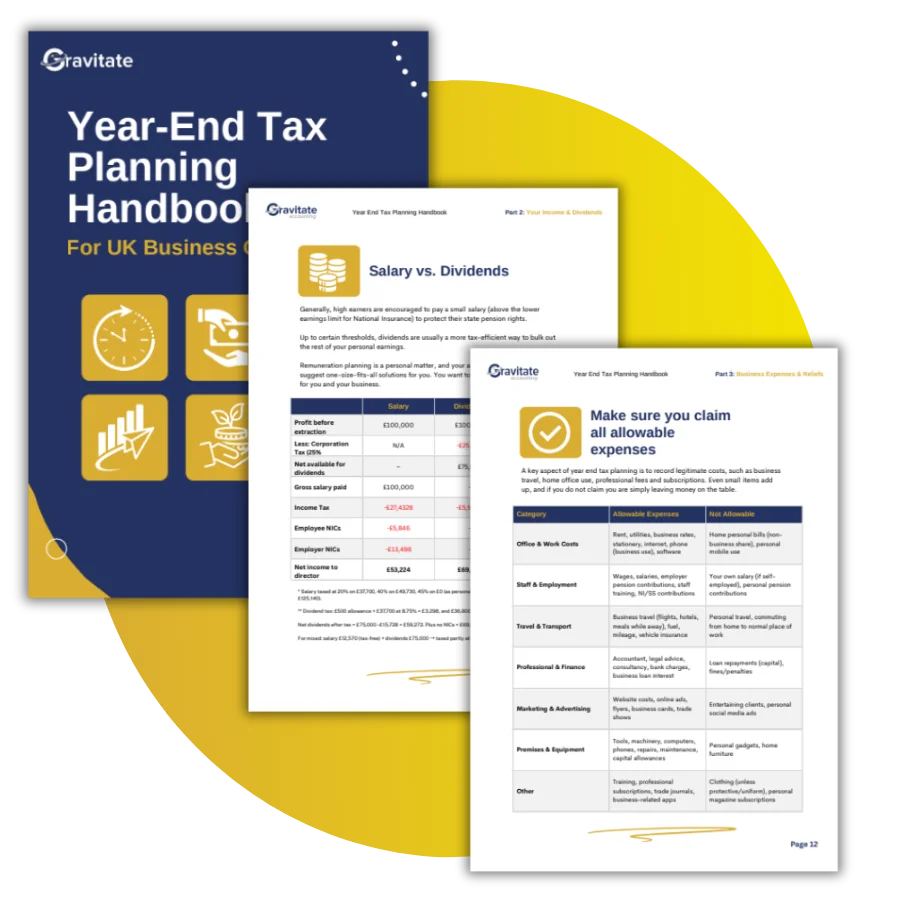
As a business owner, the tax year end provides an excellent opportunity to take stock, tidy up your finances, and significantly reduce your overall tax liability.
This guide is designed to give you an overview of the key year-end tax planning opportunities for UK business owners.
It doesn’t replace personalised advice (because everyone’s circumstances are different) but it will highlight the areas you should be aware of.
.webp)

Many reliefs and allowances work on a strict tax year basis (ending 5 April), and once the deadline passes, the opportunity is gone. This is why planning ahead is so important for a good tax position.
As a business owner, your biggest tax decision each year is how you’re going to take money out of the company. Your mix of salary, dividends, bonuses, and other benefits determines both your personal tax bill and how much NICs and corporation tax your company pays.
Business expenses and tax reliefs are powerful tools to reduce your company’s taxable profits, but they need to be reviewed before year-end to have a positive impact.
Disposing of property or other assets can create sizeable taxbills, so year-end planning is key.
Pension contributions can reduce taxable income, restore lost allowances, and attract tax relief, while ISAs offer tax-free growth and withdrawals.
Year-end isn’t just about minimising this year’s tax bill. It’s alsothe perfect time to think about the future.
For business owners, beyond immediate tax savings, the year end is a great time to review how your company is both structured and financed.
When downloading our guide, you will not receive any sales calls or be placed into a sales funnel unless you tell us you're actively seeking advice via the download form. We will contact you by email and ask you for feedback on the guide, but you can unsubscribe from this at any time.

Download Today





Unit 13E
92 Burton Road
Neepsend
Sheffield
S3 8BX
United Kingdom



.webp)
.png)


.svg)