

.png)
Scenario planning is a strategic tool that looks forward and imagines different possibilities – good and bad – in an effort to help businesses prepare for uncertainty by exploring multiple, plausible future outcomes.
It involves asking “what if” and making assumptions about the future, evaluating them, and determining how this could affect the businesses as a result.
As market conditions, regulations, and technologies can shift rapidly, scenario planning aids businesses to be as prepared as possible, no matter what happens in the future.
Scenario planning serves a similar purpose to financial modelling. However, it differs slightly as financial modelling provides a data-backed structure while scenario planning actually tests the model’s sensitivity to various changes.
How to do Scenario Planning
Scenario planning involves creating multiple, plausible, detailed futures to test potential strategies against, rather than predicting a single outcome.
To do so, start by identifying any driving forces that may affect your business. Then, you can select which factors could have the largest impact on your organisation and develop scenarios based off of the two critical uncertainties chosen.
Why is Scenario Planning Important?
For any organisation, long-term sustainability is paramount. Scenario planning helps ensure this by allowing companies to weigh up possible ramifications in context. In doing so, you can prevent poor long-term choices.
Scenario planning also ensures that decisions are well-informed and all possibilities are laid out with pros and cons. This can provide a competitive advantage by enabling leaders to react quickly and decisively.
When a situation has already been thought through and actions documented, it prevents scrambling in the midst of a crisis. This aids businesses by giving them the frameworks to make decisions more effectively.
The Benefits of Scenario Planning
Scenario planning enables long-term sustainability as well as several other benefits, which we’ll list below.
Risk Management
Considering a variety of possible outcomes means that you can identify risks early and develop strategies to prevent them before they become problems.
If you’re planning to invest and expand your team for growth, scenario planning can help you understand what will happen if your sales perform better, worse than, or as expected so you can plan accordingly.
Increased Flexibility
Building flexible strategies means that your business can adapt to change or pivot if circumstances require it to.
For example, a significant tax rate change or relief reduction could severely impact your cash flow. Scenario planning enables you to predict what would happen if a key tax rate changes suddenly, or relief is lost.
Enhanced long-term vision
Scenario planning helps ensure that you know your business is ready to take on future challenges. Knowing this also means you can optimise your resources effectively.
If you’re planning to diversify or expand into new markets, scenario planning can help you prepare for varying levels of success.
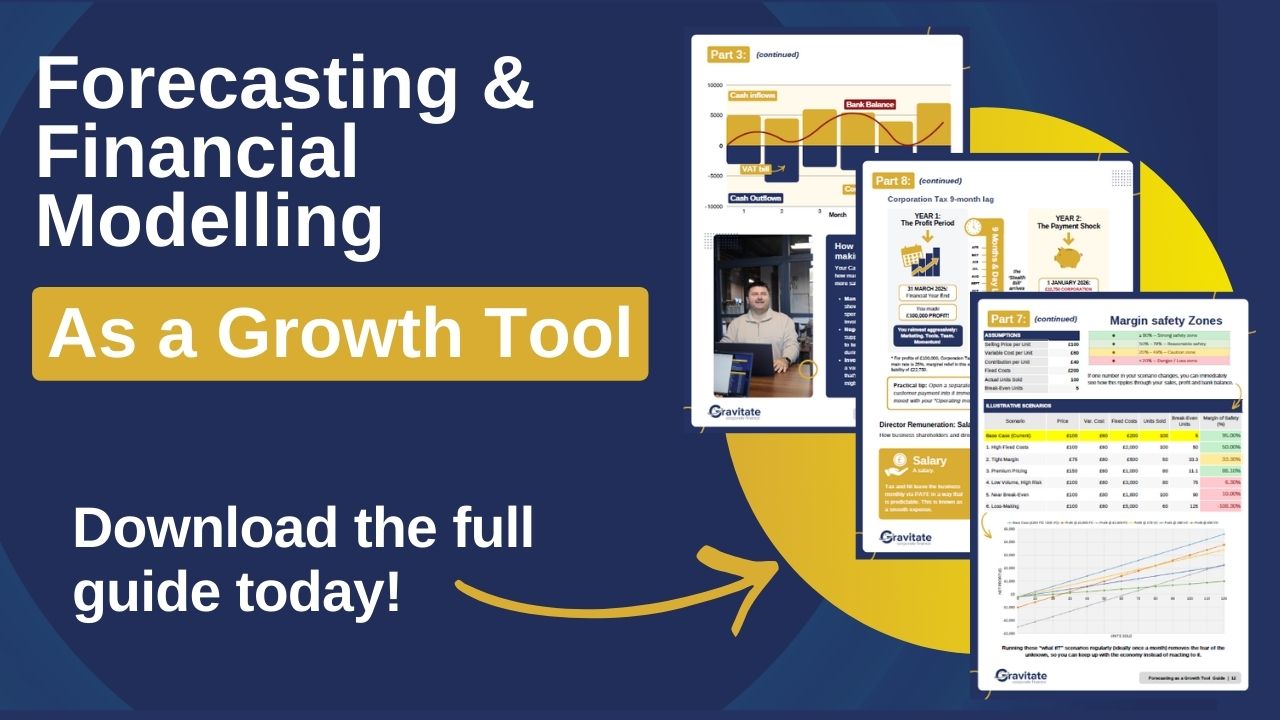
Scenario Planning is a great way to ensure long-term sustainability for your business. Through looking to the future and understanding how to prepare, you can mitigate risk and move with confidence. We can help!
Read More:
.jpg)

.jpg)
%2010.jpg)







.webp)
.png)


.svg)
