

.png)
Making sure that your accounting approach is proactive and strategic all year round is really important. That’s why we created our “12 Months of Smarter Accounting” guide on how to plan ahead to achieve the results that are going to help you reach both financial and long-term profitability for your finance function.
Many businesses set up bank accounts, loans, overdrafts, and finance facilities and rarely revisit them. However, regular reviews uncover cost savings, improve cash flow, strengthen lender relationships, and ensure your finances continue to support your long-term goals.
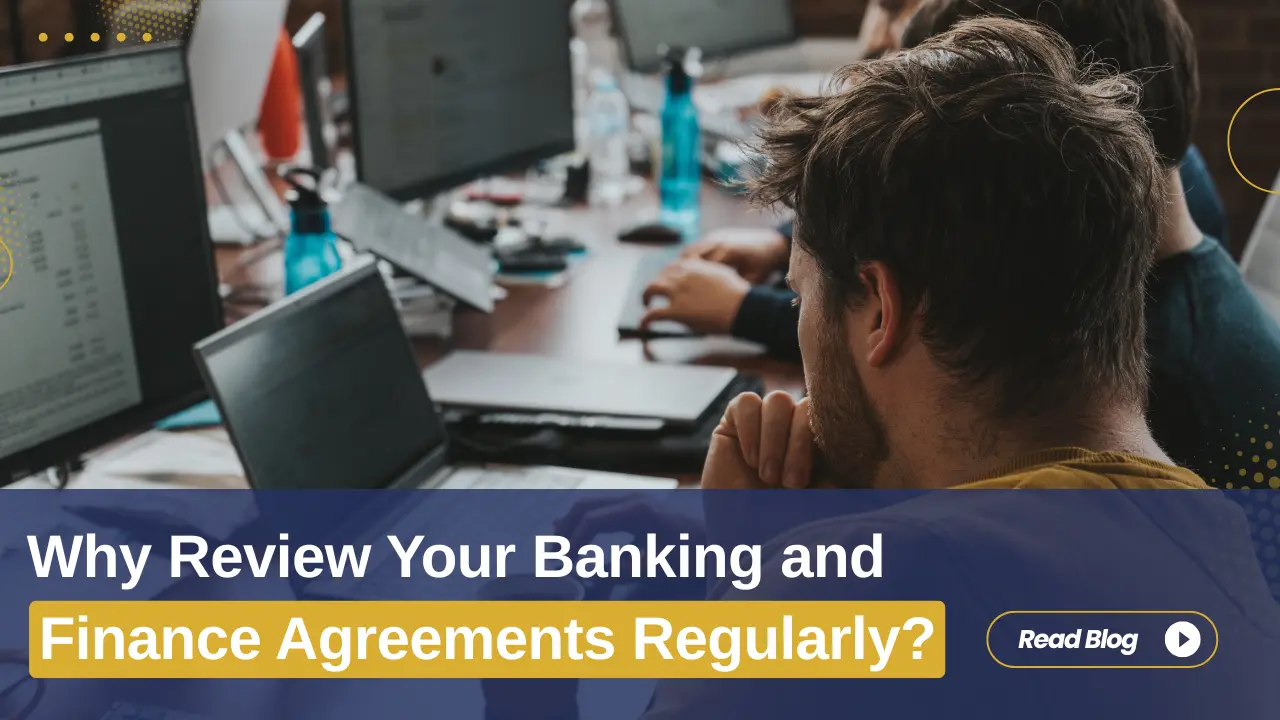
Why Review Your Banking and Finance Agreements?
A review can help you:
- Ensure compliance with loan and finance agreement terms
- Identify opportunities to reduce fees and financing costs
- Maximise returns on surplus cash
- Strengthen relationships with banks and lenders
Reviewing your banking regularly means you can respond proactively to changing market conditions.
What Should You Include in Your Reviews?
Is your money working for you?
It is important that you are making your money work hard for you. Our favourite two examples of this are:
- If your business holds surplus cash, placing it in a high-interest business savings account can generate meaningful returns with minimal effort.
- Business credit cards can also offer value through cashback and reward schemes. At Gravitate, we use Capital on Tap, which provides 1% cashback on business expenditure.
Review Your Current Banking Arrangements
Reviewing all existing banking relationships, including your transaction accounts, credit cards, and merchant facilities, helps ensure your accounts continue to meet your operational needs. It also means that you can check signatories, online access, and account limits are up to date.
Review Loan and Finance Agreements
Next, examine all existing finance agreements, including business loans, equipment leases, and overdrafts.
It’s worth ensuring that your business is compliant with all terms and assessing whether each facility still supports your business objectives. Financing arrangements that made sense several years ago may no longer be the most suitable option today.
Evaluate Interest Rates and Fees
It’s important to check that your current interest rates are still competitive! Take time to review account fees, merchant processing fees, loans, and arrangement fees.
If you have a good relationship with your point of contact, try renegotiating with your bank or exploring other providers if better terms are available.
If you don’t, this is a really good reason to reach out and start building that positive relationship up with them.
Check Financial Covenants and Obligations
Many finance agreements include financial covenants (like debt-to-equity ratios or interest cover, and minimum cash balances).
We recommend checking that you’re meeting these requirements and tracking them regularly.
Breaching a covenant, even by accident, can lead to penalties or early loan recall.
By reviewing these regularly, you can identify potential issues early and take corrective action before they become a problem.
Assess Future Financing Needs
Always think ahead about any upcoming needs. You might have growth initiatives, plan asset purchases, or working capital that you want to use.
If additional funding may be required in the future, it’s often better to start discussions with lenders early rather than waiting until finance becomes urgent.
Keep Documentation and Contacts Up to Date
You should ensure that all key financial documents are up to date, organised and accessible, and that you have up-to-date contact details for your banking relationship managers.
You should also maintain up-to-date contacts for:
- Relationship managers
- Lenders
- Finance Providers
- Professional Advisers
Having accurate information readily available can save valuable time when decisions need to be made quickly.
If you are unsure whether you have a good deal, contact us, and we can introduce local specialists who can review the market to ensure you aren’t wasting any money.
For more practical financial planning tips, download our free 12 Months of Smarter Accounting guide, which provides month-by-month advice to help you stay ahead throughout the financial year.

.jpg)


.jpg)

%2010.jpg)










.webp)
.png)


.svg)
